
BOOK 4 OF 12 · KOTLIN MULTIPLATFORM, OFFLINE-FIRST STATE & DETERMINISTIC CI
CrashCalc
My father is a veteran forensic crash reconstructionist, and rebuilding his commercial software together is a study in why builder judgment starts with human context rather than technology hype. Investigators live in two opposite worlds: standing beside highway skid marks at 2 a.m. in work gloves with zero cell reception (where offline-first local state, native sensor roadway-grade fusion, and never hitting an auth or billing wall are non-negotiable), and sitting in court months later defending every equation under cross-examination.
Because cloud and coding agents make it easy to bolt AI onto everything, restraint mattered most here: forensic physics must remain 100% deterministic, auditable, and local on-device, never probabilistic. We architected one shared, strictly typed Kotlin Multiplatform core across native iOS and Android with encrypted local persistence, clean optional cloud-sync security boundaries, step-by-step measurement guardrails, and printed textbook citations (Fricke, 2010; Daily & IPTM, 2018), using an isolated multi-agent Git worktree pipeline gated by deterministic boundary-condition CI checks.
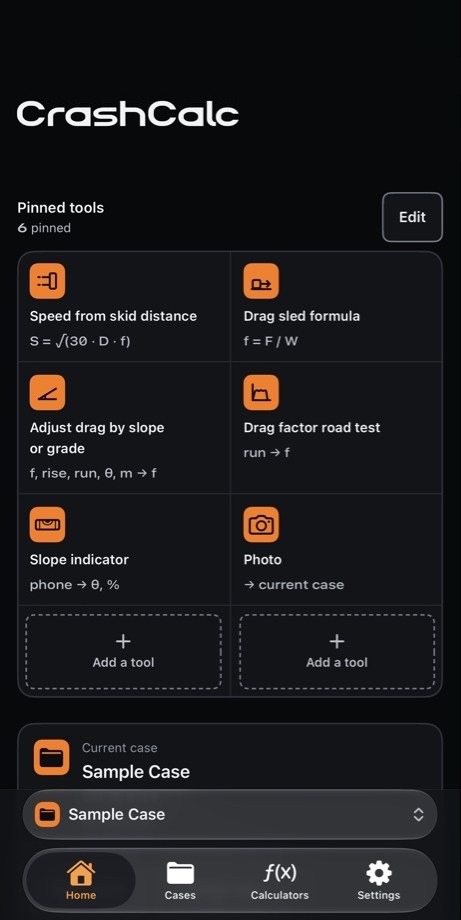 Offline Roadside ModeZero-signal tools & live slope
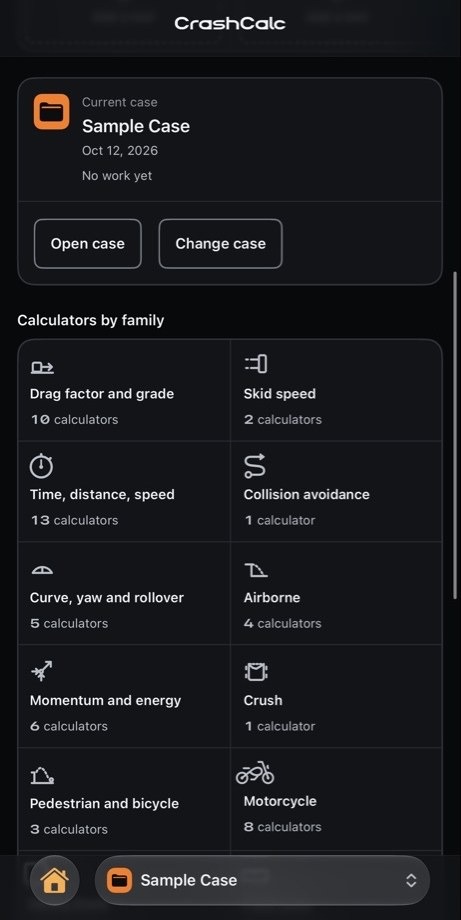 Typed KMP CoreShared iOS/Android case state
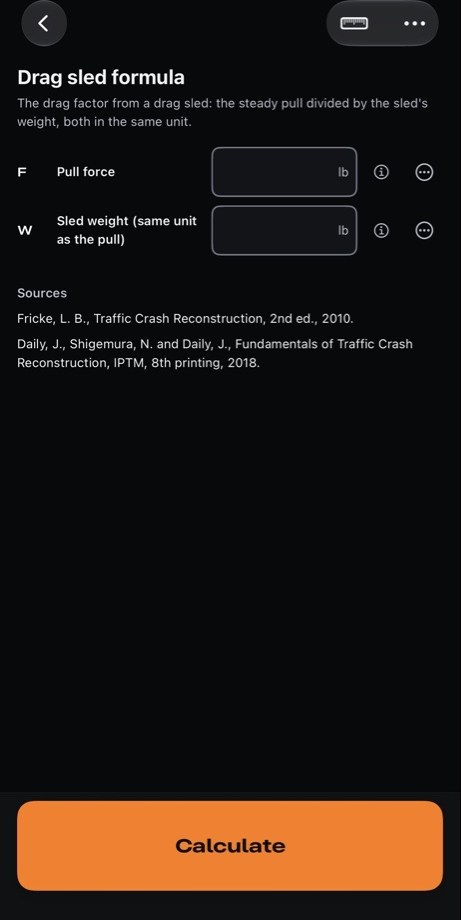 Courtroom TraceabilityFricke & IPTM printed on-screen
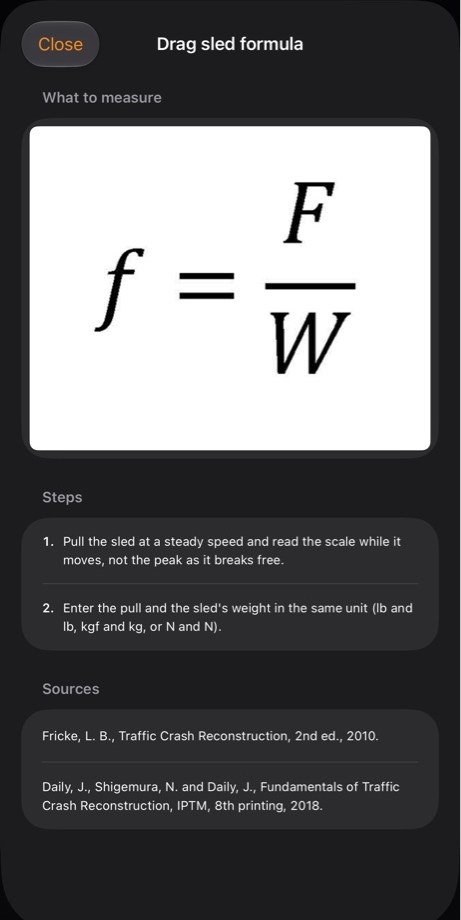 Input GuardrailsSteady-pull rules prevent bad data
“A paywall never appears at a crash scene.”
See how this roadside vs. courtroom split anchors my PM class: Problems First